
Faculty


JILA faculty comprise (1) University of Colorado-Boulder professors from the departments of Astrophysical & Planetary Sciences, Chemistry & Biochemistry, Molecular, Cellular, & Developmental Biology, and Physics; (2) selected members of the National Institute of Standards & Technology's Quantum Physics and Time & Frequency divisions who are also adjoint UCB faculty; (3) Members of JILA; (4) Retired JILA faculty; and (5) Adjoint faculty who work at other institutions. The JILA mailing address is: JILA, University of Colorado, 440 UCB, Boulder, CO 80309-0440. Email addresses and telephone numbers appear in individual faculty entries.

Active Fellows


Dana Z. Anderson [home page]
Fellow of JILA
Professor, Department of Physics
dana@jila.colorado.edu (303) 492-5202

Research Areas: Atomic & Molecular Physics, Optical Physics, Precision Measurement
I'm interested in nonlinear optics, atom optics and optical precision measurements. In nonlinear optics, I study photorefractive systems for measurement and information processing, especially self-organized information processing. Our group is currently investigating acoustic and RF antenna-array signal processing and sensing of chemical vapors. Atom-optics research centers on the development of atom waveguides, atom "chip" technology, and the use of Bose-Einstein condensates to make practical devices. The group is currently developing integrated atom interferometers for inertial navigation and other sensing applications. (CV and publication list)
Phil Armitage [home page]
Fellow of JILA
Associate Professor & Associate Chair, Department of Astrophysical and Planetary Sciences
pja@jilau1.colorado.edu (303) 492-7836

Research Areas: Astrophysics
In my work as a theoretical astrophysicist, I focus on problems in fluid dynamics near black holes and in protoplanetary disks. My recent work includes studies of the formation and early evolution of extrasolar planetary systems; numerical simulations of turbulence in black hole accretion flows; and investigation of the astrophysical consequences of binary black hole mergers in galactic nuclei. (CV and publication list)
Mitchell C. Begelman [home page]
Fellow of JILA
Professor, Department of Astrophysical and Planetary Sciences
mitch@jila.colorado.edu (303) 492-7856

Research Areas: Astrophysics
My research in theoretical astrophysics includes studies of astrophysical gas dynamics, magnetohydrodynamics, and radiative transfer theory as applied to a broad range of astrophysical phenomena. These include active galaxies and quasars, compact objects, star formation, galaxy formation, and dynamics and evolution of dense stellar systems. (CV and publication list)
Peter L. Bender
Fellow Adjoint of JILA
Senior Research Associate, JILA
pbender@jila.colorado.edu (303) 492-6793

Research Areas: Astrophysics, Precision Measurement
I'm interested in the use of precision measurement methods in astrophysics, gravitational physics, and planetary studies. My main focus is on the development of a gravitational wave mission known as the Laser Interferometer Space Antenna (LISA), which will one day observe thousands of individual binaries containing compact stars throughout the galaxy. LISA's major objective is the study of signals from different types of massive black holes at cosmological distances. I also participate in other proposed missions in optical astronomy and geophysics. (CV and publication list)
John L. Bohn[home page]
Fellow of JILA
Associate Research Professor, Department of Physics
bohn@murphy.colorado.edu (303) 492-5426

Research Areas: Atomic & Molecular Physics
My primary research centers on the theory of collisions between trapped atoms and molecules in a dilute gas at milliKelvin temperatures and below. In this novel energy regime, tiny energy splittings (due, for instance, to magnetic interactions or molecular rotations) dominate the collision dynamics. My goal is to unravel these delicate energy exchanges and assess their response to external electromagnetic fields. More broadly, I'm looking for novel approaches to understanding collective motions of many-body quantum-mechanical systems such as electrons in an atom or semiconductor device or atoms in a Bose-Einstein condensate. (CV and publication list)
Peter S. Conti
Fellow Adjoint of JILA
Professor Emeritus, Department of Astrophysical and Planetary Sciences; Senior Research Associate, JILA
pconti@jila.colorado.edu (303) 651-0498 (home)

Research Areas: Astrophysics
My fundamental interest is in understanding the nature and evolution of massive stars: the hottest spectral types, the youngest, and the most luminous. These primarily O type stars are found in the Galactic plane and in regions of recent star formation in other galaxies. Currently, I am emphasizing photometry and spectroscopy of luminous stars in our Galaxy in the near infra-red, at about two microns, and at longer wavelengths. Here the absorption of the intervening Galactic dust is low, and the stars can be observed even though they are completely obscured in the optical. This work is intended to clarify our understanding of the very youngest stars, which are typically still embedded in their natal dust shrouds. I am carrying out such observations in collaboration with astronomers at KPNO, University College, London, Sheffield University and the University of Sao Paulo, Brazil. I am using observations with Gemini telescopes (or equivalent) as well as assigned time on the IR Spitzer space telescope.
Eric A. Cornell [home page]
Fellow of JILA
Professor Adjoint, Department of Physics
cornell@jila.colorado.edu (303) 492-6281

Research Areas: Atomic & Molecular Physics, Nanoscience, Precision Measurement
My research interests center around the behavior of extremely cold atomic gases. Recent developments in laser-cooling techniques have made possible new families of experiments at microKelvin temperatures. My group investigates techniques for manipulating cold atoms and studies interactions between trapped alkali atoms at collision energies below one microKelvin. I am best known for producing a Bose-Einstein condensate in a sample of trapped atoms. Most recently I've begun a project to measure the electric dipole moment of the electron, a project designed to investigate the particle physics concept known as "supersymmetry." (CV and publication list)
Steven T. Cundiff [home page]
Fellow of JILA
Professor Adjoint, Departments of Physics and Electrical and Computer Engineering
cundiffs@jila.colorado.edu (303) 492-7858

Research Areas: Atomic & Molecular Physics, Nanoscience, Optical Physics, Precision Measurement
Ultrafast optics is my primary research interest. In particular, I study the interaction of ultrashort pulses of light with semiconductors. In direct-gap semiconductors, such as gallium arsenide, the coherent optical response is determined by many-body interactions among electronic carriers excited by the incident pulses.
James E. Faller
Fellow Adjoint of JILA
Senior Research Associate, JILA
fallerj@jila.colorado.edu (303) 492-8509

Research Areas: Precision Measurement
My research interests include geophysics, experimental relativity, fundamental constants, and precision measurement experiments designed to look for possible invalidations of accepted physical laws at some extreme of magnitude. I continue to work on the refinement of a small and portable apparatus to measure "g," the acceleration of gravity; the development of low-frequency isolation systems to extend to lower frequencies the possibility of ground-based gravitational spring systems to be used both as the primary instrument and as the spring element in active feedback isolation systems. Finally, I am working on a new measurement of G, the Newtonian constant of gravitation.
Chris H. Greene [home page]
Fellow of JILA
Professor, Department of Physics
chg@jila.colorado.edu (303) 492-4770

Research Areas: Atomic & Molecular Physics, Chemical Physics, AMO Theory
My major interests include strong correlation effects in atoms and molecules, nonperturbative external field interactions, and alignment and orientation of photofragments. My current theoretical projects aim to develop efficient conceptual methods to handle strong coupling between two or more degrees of freedom in an atom or molecule. Recent systems I have studied include atoms and negative ions in external magnetic or electric fields; as well as high, doubly excited states of atoms like calcium and simple molecules like hydrogen. I have considered the related problem of interactions between electronic and nuclear motions in diatomic or triatomic molecules. I am increasingly emphasizing problems relating to ultracold collisions and the many-body physics of Bose-Einstein condensates.
John L. Hall [home page]
Fellow Adjoint of JILA
Senior Research Associate, JILA
jhall@jila.colorado.edu (303) 492-7843

Research Areas: Atomic & Molecular Physics, Optical Physics, Precision Measurement
My research interests include laser stabilization and precise scan techniques using interferometry and/or heterodyne techniques, amplitude stabilization near the "photon-shot-noise" level with classical electro-optical methods, and "squeezed" beams of sub-shot-noise level or correlated photons produced in nonlinear interactions. I pursue continuous-wave approaches for application in both gravity-wave antennas and measurement of magnetically induced birefringence of the vacuum. Optical atomic clocks based on a strontium "atomic fountain" will allow "ultra-resolution" determination of linewidths < 10 Hz. A new modulation detection scheme permits cavity-enhanced nonlinear spectroscopy that provides unprecedented sensitivity (<10-12 absorption) using molecular overtone transitions in the near-visible infrared. (CV and publication list)
Andrew J. S. Hamilton [home page]
Fellow of JILA
Professor, Department of Astrophysical and Planetary Sciences
hamilton@jila.colorado.edu (303) 492-7833

Research Areas: Astrophysics
My research is theoretical, and my principal interests include black holes, cosmology, and supernovae. My black hole work focuses on general relativistic visualization. My cosmological work concentrates mainly on devising and applying methods to analyze large observational data sets, notably galaxy surveys, with a view to extracting cosmological parameters and other fundamental properties of the Universe.
Murray Holland [home page]
Fellow of JILA
Associate Professor, Department of Physics
mholland@jila.colorado.edu (303) 492-4172

Research Areas: Atomic & Molecular Physics, Optical Physics, AMO Theory
My research involves theoretical studies of Bose-Einstein condensation, including (1) the modes of oscillation, (2) the quantitative effect of interactions and loss processes, (3) the behavior of a condensate undergoing evaporative cooling, and (4) the thermodynamics of a small number of atoms. My future research interests include the damping processes of coherent excitations, quantum diffusion of the condensate phase, and new methods for treating quantum kinetic theory. I also investigate quantum optics, in which I study the properties of laser fields and their interaction with matter. My other interests include optical cavities and their interaction with atomic beams and quantum measurement theory.
Ralph Jimenez[home page]
Associate Fellow of JILA
Assistant Professor Adjoint, Department of Chemistry and Biochemistry; Lecturer, Department of Physics
rjimenez@jilau1.colorado.edu (303) 492-8439

Research Areas: Biophysics, Chemical Physics
I am primarily interested in measuring the spectra of biomolecular motions, understanding the structural nature of these motions, and relating the dynamics to biological function. The dynamics of biological macromolecules span an enormous range of time from femtoseconds (10-15 sec) to seconds. The characterization of these motions represents a formidable experimental challenge. My laboratory employs ultrafast laser spectroscopies for measuring the femtosecond through nanosecond time-scale dynamics that underlie the slower motions. I perform studies on samples modified with biochemical techniques that produce well-defined changes in molecular structure. (CV and publication list)
Deborah S. Jin [home page]
Fellow of JILA
Professor Adjoint, Department of Physics
jin@jilau1.colorado.edu (303) 492-0256

Research Areas: Atomic & Molecular Physics, Nanoscience
My research focuses on ultracold trapped atoms. My experiments use laser cooling, magnetic trapping, and evaporative cooling to reach temperatures below one microKelvin, where quantum statistics dominate the behavior of atoms. By cooling fermions, in addition to bosons, we can explore a variety of phenomena such as Bose-Einstein condensation, Cooper pairing of fermions, ultracold atomic interactions, and superfluidity in dilute atomic gases.
Henry Kapteyn [home page]
Fellow of JILA
Professor, Department of Physics
kapteyn@jila.colorado.edu (303) 492-8198

Research Areas: Atomic & Molecular Physics, Nanoscience, Optical Physics
My major interest includes the development of new light sources at short wavelengths and their use to study dynamic processes in material and chemical systems. In particular, the recent development of high-energy ultrashort-pulse laser technology (in large part by the research group I co-lead with Professor Murnane) allows generation of coherent extreme-ultraviolet (EUV) and soft-X-ray bursts of femtosecond (10-15 sec) and even attosecond duration. (For comparison, the ratio of 1 femtosecond to 1 second is about the same as the ratio of 1 second to 30 million years.) The time scales probed by these light pulses correspond to those of chemical reactions and dynamic processes in semiconductors. Thus short-pulse short-wavelength light provides researchers with a unique tool to observe specific atoms, leading to a deeper understanding of the microscopic mechanisms. In recent years, our group has developed a variety of new techniques to efficiently upconvert ultrashort laser pulses coherently into the EUV and soft-X-ray regions of the spectrum. I am also a founding member of the National Science Foundation Engineering Research Center in Extreme Ultraviolet Science and Technology (http://euverc.colostate.edu/) and co-founder of a successful laser company (www.kmlabs.com). (CV and publication list)
Konrad Lehnert [home page]
Associate Fellow of JILA
Assistant Professor Adjoint, Department of Physics
konrad.lehnert@jila.colorado.edu (303) 492-8348

Research Areas: Nanoscience, Precision Measurement
My research interests include quantum coherence in nanoscale electrical circuits (solid-state qubits), dynamics of individual electrons in one-dimensional conductors, and ultrafast quantum-limited charge measurements. Recent advances in nanolithography and cryogenic electronics have made it possible to sense individual electrons as they move through nanometer-sized conductors. My research exploits this ability to detect the quantum superposition of macroscopically distinct states of electrical circuits and to detect the flow of single electrons through molecular wires. My current work addresses the following questions: What are the sources of decoherence in solid-state qubits? How efficiently and how quickly do electrons screen each other in nanoscale circuits? Can a sensor of charge reach quantum-limited sensitivity? (CV and publication list)
Judah Levine [home page]
Fellow of JILA
Professor Adjoint, Department of Physics
jlevine@jila.colorado.edu (303) 492-7785

Research Areas: Precision Measurement
My research focuses on understanding the statistics of precision clocks and frequency standards, developing methods for distributing precise time and frequency information, and applying precision measurement techniques to problems of geophysical interest. My specific projects include developing methods for transmitting time using dial-up telephone lines, the internet, and satellite systems; investigating algorithms for authenticating time signals transmitted via public networks; and designing a statistically optimum method for distributing data from a primary frequency standard without degrading its accuracy. In addition, I continue to work to improve the accuracy and stability of Coordinated Universal Time, the time scale used as a reference by all of the NIST time and frequency services.
Heather Lewandowski [home page]
Associate Fellow of JILA
Assistant Professor, Department of Physics
lewandoh@jilau1.colorado.edu (303) 492-1446

Research Areas: Atomic & Molecular Physics, Nanoscience
My group uses a two-step process to prepare ultracold molecules of NH, a simple free radical. The first step, supersonic expansion, forces NH molecules through a small opening into a vacuum system, where intermolecular collisions cool the rapidly expanding gas (400 m/s) to less than 1 K. The second step uses varying electric fields (Stark deceleration) to slow the cold molecules to rest. Once the molecules are cold and stopped, we can subject them to magnetic trapping, electrostatic trapping, laser cooling, or sympathetic cooling. I plan to work with theorist John Bohn to investigate collisions of cold polar NH radicals (produced in this process) with each other and with ultracold atoms such as Rb.
W. Carl Lineberger [home page]
Fellow of JILA
E. U. Condon Distinguished Professor, Department of Chemistry and Biochemistry
wcl@jila.colorado.edu (303) 492-7834

Research Areas: Chemical Physics
My research centers around the interaction of radiation with ions. I use tunable laser photodetachment to probe electron correlation and to investigate dipole-bound states of negative ions. I use negative-ion photoelectron spectroscopy to determine electron affinities and structures of radicals and metal clusters. I study the transition from gas phase to condensed phase by means of photodissociation and photodetachment of cold cluster ions by using nanosecond and picosecond lasers. I study ultrafast molecular rearrangement dynamics using pump-probe, and photodetachment-photoionization of negative ions. (CV and publication list)
Jeffrey L. Linsky [home page]
Fellow of JILA
Research Professor, Department of Astrophysical and Planetary Sciences
jlinsky@jila.colorado.edu (303) 492-7838

Research Areas: Astrophysics
My current research topics include the abundance of deuterium in the Galaxy, structure and physical properties of the local interstellar medium, and X-ray and ultraviolet emission from young stars and protostellar disks. The observational basis of my research is primarily high-resolution ultraviolet spectra obtained with instruments on the Hubble Space Telescope (HST) and the Far Ultraviolet Spectrograph Explorer (FUSE) satellites and X-ray spectra obtained with the Chandra X-ray Observatory. My other research areas include the physical properties of chromospheres, coronae, and winds of late-type stars and active binary systems, flare stars, RS CVn-type binary systems, stellar magnetic fields, and stellar microwave emission.
Richard McCray [home page]
Fellow Adjoint of JILA
George Gamow Distinguished Professor Emeritus, Department of Astrophysical and Planetary Sciences
dick@jila.colorado.edu (303) 492-7835

Research Areas: Astrophysics
My major interests are theoretical astrophysics, atomic and molecular processes in astrophysics, interstellar gas dynamics, and space astronomy. My present research program includes theoretical studies of the hydrodynamics, thermodynamics, and atomic and molecular processes in astrophysical gases; formation of astrophysical spectra; models for compact galactic x-ray sources and supernovas; and observations of these phenomena with spacecraft.
Margaret Murnane [home page]
Fellow of JILA
Distinguished Professor, Department of Physics
murnane@jila.colorado.edu (303) 492-7839

Research Areas: Atomic & Molecular Physics, Nanoscience, Optical Physics
My research focuses on the generation and application of ultrafast light pulses of only a few cycles in duration. For this work, Prof. Kapteyn and I design and build new types of lasers and investigate new methods for optical pulse shaping and control. One application of extremely short light pulses is to use them to generate coherent X-ray beams. These femtosecond (and possibly attosecond) duration X-ray pulses can be used to study nonlinear optics in regimes not accessible with any other techniques, for holography and microscopy, or to visualize the fastest processes in chemical and material systems. At present, we have a diverse mixture of physicists, engineers, and chemical physicists in our group. (CV and publication list)
David J. Nesbitt [home page]
Fellow of JILA
Professor Adjoint, Department of Chemistry & Biochemistry; Chair of JILA
djn@jila.colorado.edu (303) 492-8857

Research Areas: Biophysics, Chemical Physics, Nanoscience
My research includes quantum-state-resolved laser spectroscopy and dynamics of van der Waals and hydrogen-bonded clusters, time-resolved kinetics of atmospheric radicals, crossed-beam studies of state-to-state inelastic and reactive dynamics, high-resolution laser spectroscopy of jet-cooled radicals and molecular ions, nonlinear frequency generation of narrowband tunable infrared laser sources, vibrationally mediated photochemistry in size/quantum state-selected clusters, alignment phenomena, collision dynamics of gases with thin films, and development of atomic force/scanning-tunneling methods for near-field-scanning optical microscopy (NSOM) of molecules on surfaces. (CV and publication list)
Robert Parson [home page]
Fellow of JILA
Professor, Department of Chemistry and Biochemistry
rparson@jila.colorado.edu (303) 492-7751

Research Areas: Chemical Physics
My research in theoretical chemical dynamics includes studies of collision-induced intra- and intermolecular energy transfer in gas and condensed phases, vibration-rotation dynamics in highly excited molecules and weakly bound molecular clusters, and photodissociation and vibrational relaxation of molecules in clusters.
Thomas Perkins [home page]
Associate Fellow of JILA
Assistant Professor Adjoint, Department of Molecular, Cellular, and Developmental Biology
tperkins@jila.colorado.edu (303) 492-5291

Research Areas: Biophysics, Nanoscience
The biochemical cycle of mechanoenzymes generates a force and a displacement that can be measured at the single-molecule level. The outstanding question is how motor proteins transduce chemical energy into physical motion. To answer this question, we use optical tweezers, a focused laser beam that can manipulate micron-sized beads in solution, allowing measurement of position and force in the nanometer (nm) and piconewton (pN) ranges, respectively. Our research focuses on developing assays and precision instrumentation to measure the properties of single-DNA-based molecular motors. Typically, enzymatic motion along the DNA is measured by anchoring the enzyme to a surface and monitoring the position of an optically trapped bead attached to the DNA's distal end.
Rosalba Perna [home page]
Associate Fellow of JILA
Assistant Professor, Department of Astrophysical and Planetary Sciences
rosalba@jilau1.colorado.edu (303) 492-0389

Research Areas: Astrophysics
My research is theoretical high-energy astrophysics, including studies of gamma-ray bursts and their interactions with their interstellar and circumstellar environment. My other interests include neutron stars, accretion disks, gravitational lensing and microlensing, and foregrounds for cosmic microwave background experiments. (CV and publication list)
Arthur V. Phelps [home page]
Fellow Adjoint of JILA
avp@jila.colorado.edu (303) 492-7850

Research Areas: Atomic & Molecular Physics, Chemical Physics
My recent research includes analyses of measurements and modeling of ion, fast neutral, and electron processes in low-current, low-pressure discharges and in the cathode region of glow discharges. I currently model the measured radiation from discharges in hydrogen and hydrogen-rare gas mixtures as well as develop and test heavy-particle cross-section sets for use in these and related models.
Ana Maria Rey [home page]
Associate Fellow of JILA
arey@jilau1.colorado.edu

Research Areas: Atomic & Molecular Physics, Optical Physics, Precision Measurement
My main research interest is ultracold atoms and molecules loaded in optical lattices, which are periodic trapping potentials created by illuminating the atoms and molecules with laser beams. Atoms in optical lattices are analogous to electrons in solid state crystals. Their big advantage is that these "artificial crystals of light" are perfectly clean and highly controllable. Therefore, they are ideal for exploring a whole range of fundamental phenomena that are extremely difficult — or impossible — to study in traditional condensed matter systems. My goal is to study how to control and manipulate these systems to engineer different quantum phases such as superfluids, insulators, quantum magnets, and topological matter. I plan to use them for understanding the physics of strongly correlated bosonic and fermionic systems and nonequilibrium phenomena. Additionally, I am interested in studying how to generate and manipulate entanglement in quantum systems for use in quantum information processing and precision measurements.
James K. Thompson
Associate Fellow of JILA
Assistant Professor Adjoint, Department of Physics
jkt@jila.colorado.edu (303) 492-7558

Research Areas: Precision Measurement
My research focuses on understanding the interface between ultracold atoms and quantum optics - an understanding I plan to apply to the field of precision measurement. I am presently devising strategies to reduce the effect of the fundamental quantum noise that arises from Heisenberg's uncertainty relationship as applied to atomic spins. In one project, I work on non-destructively measuring and canceling out the quantum fluctuations in the collective spin state of an ensemble of laser-cooled 87Rb atoms in a high-finesse optical cavity. By learning how to minimize the effect of quantum noise in this type of system, I hope to advance the precise measurements required for atomic clocks and in searches for permanent electric dipole moments in atoms and molecules. (CV and publication list)
Juri Toomre [home page]
Fellow of JILA
Professor, Department of Astrophysical and Planetary Sciences
jtoomre@jila.colorado.edu (303) 492-7854

Research Areas: Astrophysics
Astrophysical fluid dynamics is my primary research interest, and my work currently centers on theoretical treatments for compressible convection in stars. The nonlinear theory using computational fluid dynamics is complemented by detailed observations of velocity fields on the Sun, from both ground-based and satellite instruments. My interests extend to helioseismology, in which the five-minute oscillations of the Sun are used as probes of velocity and temperature structures within the interior. My group seeks to understand the coupling of global-scale convection with rotation by using a series of experiments flown on the space shuttle. My nonlinear dynamical studies in geophysics include thermohaline convection in the oceans and stratified shear flows.
J. Mathias Weber [home page]
Associate Fellow of JILA
Assistant Professor, Department of Chemistry and Biochemistry
weberjm@jila.colorado.edu (303) 492-7841

Research Areas: Chemical Physics
My group combines mass spectrometry with laser spectroscopy to characterize positively and negatively charged ions and biomolecules. One project is concerned with infrared spectroscopy of molecular and metal containing cluster ions. These are produced in a pulsed supersonic expansion, and mass selected in a time-of-flight mass spectrometer. Photons absorption leads to evaporation of weakly bound ligands from the cluster. The absorption spectra of the clusters under study can be measured by monitoring the generation of photofragments as a function of the laser wavelength. In a second project, we are developing a three-stage photofragmentation spectrometer that uses an electrospray ion source to deliver ions into an ion trap (Step 1). There, the ions can be cooled or reacted with small solvent molecules such as water. Next, the products from Step 1 are mass selectred and illuminated with tunable pulsed laser light (Step 2). Finally, the light-induced photofragments are analyzed by means of a time-of-flight spectrometer (Step 3). This system will allow us to study the spectral and dynamical differences between unsolvated, sequentially solvated, and solution phase ion species. In the future, we plan to use it to investigate the photo physics and chemistry of structurally and/or electronically complex molecules such as multiply charged anions, cationic and anionic salt cluster ions, and charged biomolecules.
Carl Wieman [home page]
Fellow of JILA
Distinguished Professor, Department of Physics; Director, Center for Science Education
cwieman@jila.colorado.edu (303) 492-6963

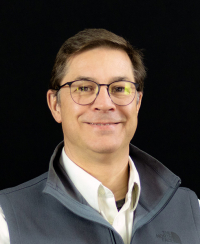
My research focus is science education. My colleagues and I in the Physics Education Research Group look at how students learn physics and chemistry and we experiment with ways these subjects can be taught more effectively. We are particularly interested in using interactive simulations to explain challenging science concepts and have developed dozens of web-based simulations as part of the Physics Education Technology Project (PhET.). We also study student beliefs about physics and chemistry and how these beliefs impact learning and are shaped by instruction. We have developed survey instruments (CLASS-physics and CLASS-chem) for measuring such beliefs. We recently began looking systematically at the teaching and learning of quantum mechanics. (CV and publication list)
Fellow of JILA
Professor Adjoint, Department of Physics
ye@jila.colorado.edu (303) 735-3171

Research Areas: Atomic & Molecular Physics, Nanoscience, Optical Physics, Precision Measurement
My main research interests include ultrasensitive laser spectroscopy, optical frequency metrology, and quantum optics using cold atoms. My group is exploring molecular dynamics using exquisitely sensitive absorption-measurement techniques developed in JILA. We also use high-sensitivity techniques to define ultrastable optical frequency standards, currently being explored for their use in metrology, communications, and high-precision measurements such as in NASA's space-borne interferometers. The use of ultrafast lasers has revolutionized the field of optical frequency metrology, and we are actively pursuing research related to the concept and application of this novel field. We are also exploring cold atoms and molecules for their use in high-precision measurement and quantum optics. (CV and publication list)

Members of JILA

Veronica Bierbaum [home page]
Professor, Department of Chemistry and Biochemistry
Veronica.Bierbaum@colorado.edu (303) 492-7081

Dan Dessau [home page]
Associate Professor, Department of Physics
Dessau@Colorado.edu (303) 492-1607

G. Barney Ellison [home page]
Professor, Department of Chemistry and Biochemistry
barney@jila.colorado.edu (303) 492-8603

Gavin Polhemus
Physics teacher, Poudre High School, Fort Collins, Colorado
gavinpolhemus@comcast.net (970) 488-6160


Retired Fellows

John (Jinx) Cooper
Fellow Adjoint of JILA
Professor Emeritus, Department of Physics
jinx@jila.colorado.edu (303) 492-7813

Research Areas: Atomic & Molecular Physics, AMO Theory
Roy H. Garstang
Fellow Adjoint of JILA
garstang@earthlink.net (303) 492-7795

Research Areas: Astrophysics, Atomic & Molecular Physics
Alan C. Gallagher
Fellow Adjoint of JILA
Lecturer, Department of Physics
alang@jila.colorado.edu (303) 492-7841

Research Areas: Atomic & Molecular Physics, Chemical Physics
Carl J. Hansen
Fellow Adjoint of JILA
chansen@jila.colorado.edu (303) 492-8497

Research Areas: Astrophysics
David G. Hummer
Fellow Adjoint of JILA
dgh@jila.colorado.edu (303) 492-8497

Research Areas: Astrophysics
Stephen J. Smith
Fellow Adjoint of JILA

ssmith@jila.colorado.edu (303) 492-7788

Research Areas: Atomic & Molecular Physics

Fellows Adjoint Working at Other Institutes and Universities

Eldon E. Ferguson
NOAA
Boulder, CO

Douglas O. Gough
Institute of Astronomy
Cambridge, England

Stephen R. Leone
University of California at Berkeley
Berkeley, CA

Neal Lane
Rice University
Houston, TX

Richard N. Zare
Stanford University
Stanford, CA

Peter Zoller
Universität Innsbruck
Innsbruck, Austria